

 News X Desk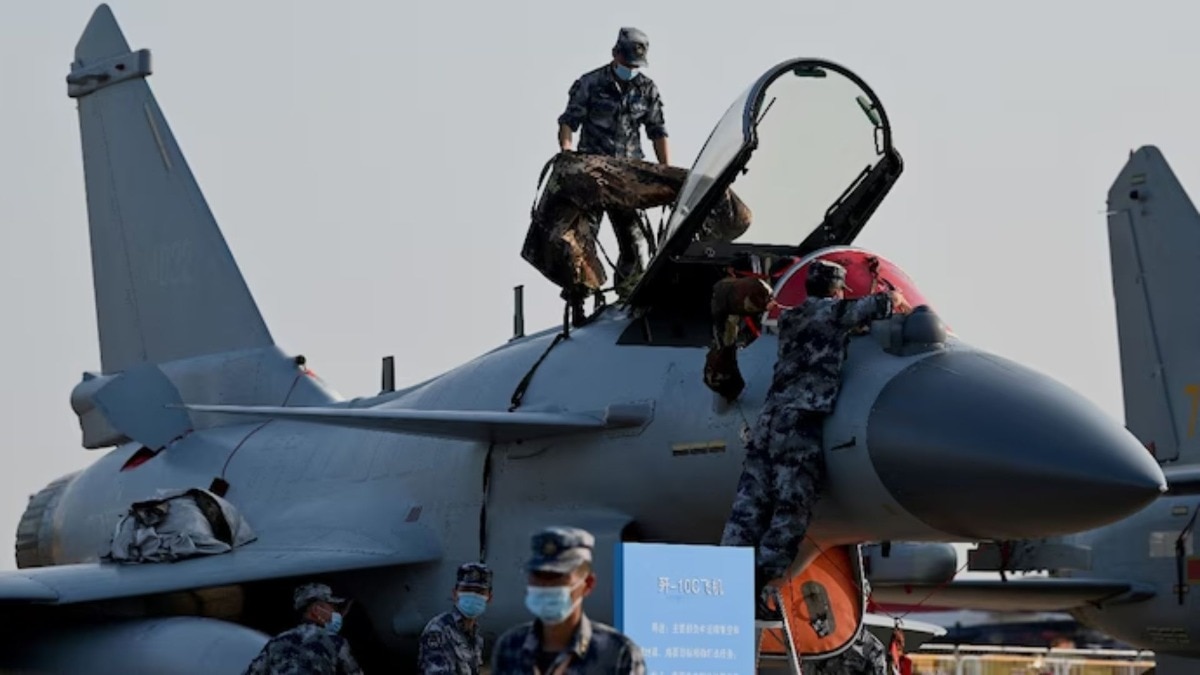
China admits rare role in Pakistan’s air war
China has made a major disclosure about the 2025 India-Pakistan conflict, saying its personnel provided on-site help to Pakistan for Chinese-made J-10CE fighter jets during Operation Sindoor.
The admission, reported by India Today, The Hindu, NDTV and Firstpost, is important because Beijing usually avoids openly discussing any direct wartime support to Islamabad. It also gives fresh attention to the growing defence ties between China and Pakistan.
The key issue is Chinese support to Pakistan during Operation Sindoor. The support reportedly included technical help linked to the J-10CE, the export version of China’s J-10C fighter jet used by the Pakistan Air Force.
What exactly did China disclose?
According to the reports, Chinese personnel were present to give support to Pakistan during the conflict with India. The help was linked to aircraft systems and the use of Chinese-origin platforms in a live war situation.
This is seen as a rare public confirmation because China often describes its defence relationship with Pakistan as routine military cooperation. But on-site support during an active conflict is a much more sensitive matter.
The disclosure suggests that Chinese teams may have helped with technical guidance, aircraft readiness, systems support, or troubleshooting. Such support can be very important during intense air operations, when pilots and ground crews need fast answers.
Why the J-10CE matters
The J-10CE is a modern Chinese fighter jet sold to Pakistan. It is designed for air combat and can carry advanced weapons, including beyond-visual-range missiles.
Pakistan inducted Chinese J-10C aircraft in 2022. Reuters reported at the time that Pakistan added the jets to its air force fleet, while The Hindu earlier reported that Pakistan had bought 25 J-10C aircraft as a response to India’s Rafale fighter jets.
Defence watchers say the J-10CE gave Pakistan a stronger Chinese-made fighter option beyond the JF-17. The JF-17 is jointly developed by Pakistan and China, while the J-10CE is a more advanced Chinese platform.
During Operation Sindoor, Pakistan highlighted the performance of Chinese weapons, including aircraft and missiles. Indian reports also noted that China-made systems such as the J-10C, JF-17 and PL-15 missile became part of the wider debate after the fighting.
Operation Sindoor put Chinese weapons under the spotlight
Operation Sindoor was a major military episode between India and Pakistan in 2025. It involved air power, drones, missiles, electronic systems and strong information warfare from both sides.
The new disclosure about Chinese support to Pakistan during Operation Sindoor adds another layer to that conflict. It suggests the fight was not only between Indian and Pakistani systems, but also a test of Chinese defence technology in real combat conditions.
For China, Pakistan is one of its closest defence partners. For Pakistan, Chinese weapons are central to its military planning, especially as India has upgraded its own air force with Rafale fighters, air defence systems and other modern platforms.
For India, the disclosure may confirm long-held concerns that any future conflict with Pakistan could also involve Chinese technology, data support or technical assistance. This is why Indian defence planners watch the China-Pakistan military relationship closely.
Why on-site support is a big deal
On-site support means that technical teams are physically present where the equipment is being used or maintained. In military terms, this can help keep aircraft flying, fix problems faster and improve mission planning.
It does not always mean that foreign personnel are fighting directly. But it can still be a major form of help during a war because modern fighter jets depend on software, sensors, weapons integration and maintenance systems.
Experts say fighter jets are not just machines. They are part of a larger network that includes radars, missiles, ground crews, mission computers and command centres.
If a country that built the aircraft provides help during a conflict, it may gain useful information about how the aircraft performs against a real enemy. That information can be used to improve the weapon in the future.
India’s concerns after the disclosure
India has long raised concerns about the deep defence partnership between Beijing and Islamabad. The two countries share close military, diplomatic and economic ties.
The reports about Chinese support to Pakistan during Operation Sindoor may sharpen those concerns. India faces China along the Line of Actual Control and Pakistan along the western border, so cooperation between the two is a serious security issue for New Delhi.
Indian officials have also studied the role of Chinese-origin missiles and aircraft after Operation Sindoor. Reports in 2025 said Pakistan used Chinese-made weapons during the escalation, while Indian military leaders later claimed Pakistan lost several aircraft during the operation.
Pakistan has denied or disputed many Indian claims, and both sides have promoted their own version of events. But China’s admission of support gives the debate a new and more concrete point.
How Pakistan benefits from Chinese military help
Pakistan has depended heavily on Chinese defence supplies for years. China has supplied fighter jets, air defence systems, drones, naval platforms and missiles.
The relationship is useful for Pakistan because Chinese weapons are often easier for Islamabad to access than Western systems. They also come with training, spare parts and long-term technical backing.
Pakistan’s J-10CE fleet is especially important because it helps the Pakistan Air Force match some of India’s newer capabilities. The aircraft is often discussed in connection with long-range air-to-air missiles and modern radar systems.
For China, Pakistan is a key strategic partner in South Asia. Defence cooperation with Pakistan also gives Beijing a way to expand the global presence of its military technology.
What this means for South Asia
The admission could affect the military balance in South Asia. It may push India to speed up upgrades in air defence, electronic warfare, cyber defence and fighter aircraft technology.
It may also increase attention on foreign technical teams during wars. Countries may ask whether outside personnel are only maintaining equipment or actively helping one side gain an advantage.
The issue of Chinese support to Pakistan during Operation Sindoor is therefore not just about one fighter jet. It is about how modern wars are fought with help from partners, suppliers and technology networks.
Modern combat is no longer only about soldiers on the front line. It also includes software updates, satellite data, radar pictures, missile guidance, repair teams and electronic warfare.
A rare admission with lasting impact
China’s disclosure is likely to be studied closely by defence experts, diplomats and military planners. It gives a clearer picture of how closely China may have worked with Pakistan during the 2025 conflict.
It also raises a bigger question: if another India-Pakistan crisis breaks out, how far will outside powers go in supporting their partners?
For now, the admission has made one thing clear. The China-Pakistan defence partnership is not just about selling weapons; it may also include real-time technical support when those weapons are used in conflict.
FAQs
What did China reveal about Operation Sindoor?
China reportedly confirmed that its personnel provided on-site support to Pakistan during Operation Sindoor. The support was linked to Chinese-made J-10CE fighter jets used by the Pakistan Air Force.
What is the J-10CE fighter jet?
The J-10CE is the export version of China’s J-10C fighter aircraft. Pakistan inducted the jet in 2022 to strengthen its air force, especially after India acquired Rafale fighter jets.
Does on-site support mean Chinese personnel fought in the war?
Not necessarily. On-site support usually means technical help, maintenance support or systems guidance. However, such help can still be very important during a live conflict.
Why is this disclosure important for India?
India is concerned because it shows how deeply China may support Pakistan during a crisis. It also suggests that Chinese weapons and technical teams could play a bigger role in future conflicts.
How does this affect South Asia’s security situation?
The disclosure may increase tensions and push countries to upgrade their military systems. It also shows that modern wars can involve foreign technology partners, not just the countries directly fighting.
